
Leave a Message
If You are Interested in our Products and Want to Know More Details,Please Leave a Message Here,We Will Reply You as Soon as We Can.

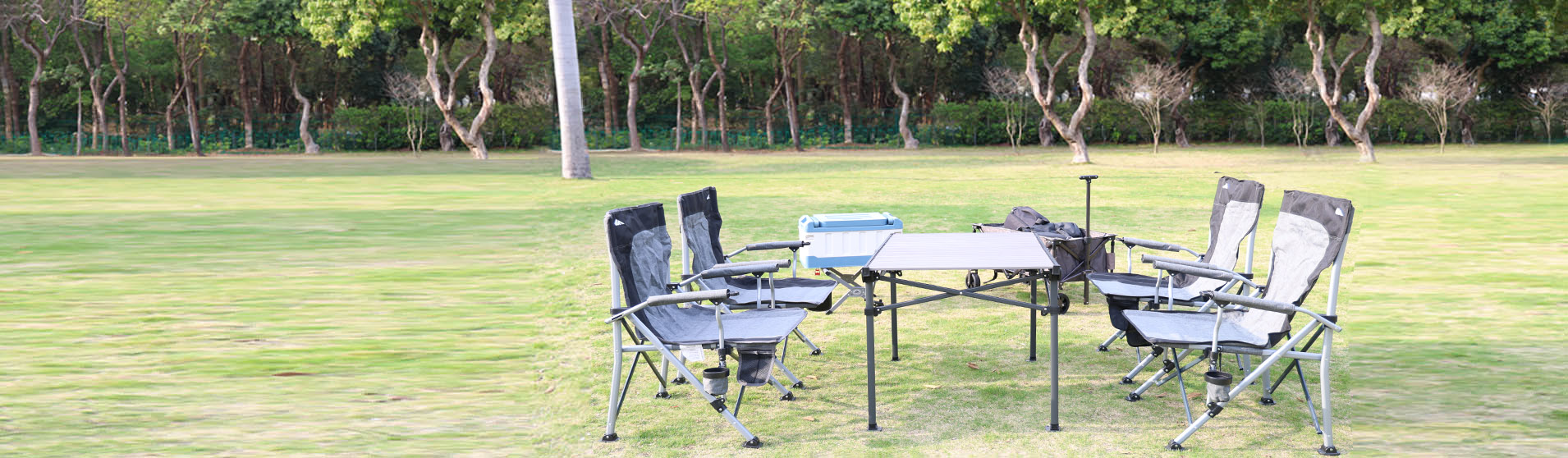
Camping furniture looks like a straightforward product category until you try to source across multiple markets. The weight capacity that matters to a North American buyer, the packed dimensions that determine retail viability in Europe, the coordinated colorways that drive sell-through in East Asia, the fabric specification that shapes durability expectations in Australia — these are not minor variations. They reflect genuine differences in use context, retail environment and buyer expectation that are worth addressing at the development stage rather than resolving through post-production compromise.
For importers, brand buyers and procurement teams managing multi-market ranges, building product briefs that reflect regional requirements from the outset tends to produce better outcomes — and requires working with manufacturers who can translate those requirements into specific structural, material and configuration decisions. This article outlines what those differences look like in practice, and what they mean for product development.
The dominant use scenarios in North America — family camping, RV travel, tailgating — share a common demand profile: products need to accommodate heavier users, hold up through extended outdoor sessions and include the convenience features that make repeated use practical. Comfort is the outcome, but the specification path to get there is specific.
Oversized seating with reinforced frames and higher weight ratings is a consistent requirement. Cup holders, side storage pouches and padded armrests are commonly expected in this market rather than treated as optional upgrades. Folding tables need to be stable under load. Color direction runs toward earthy neutrals, muted olive and camo-adjacent tones that manage dirt visibility across a camping weekend.
The product development implication is load-bearing logic applied across the range. A camping chair specified for this market is typically designed around structural integrity first — tube gauge, joint reinforcement, seat fabric tensile strength — with comfort features layered on top. Packaging also needs to accommodate the larger footprint of oversized designs without making freight costs prohibitive. For buyers developing North American SKUs, heavy-duty camping chairs, high-capacity folding tables and cooler stands with stable base construction are the relevant categories to prioritize.
European buyers are navigating a specific set of trade-offs. Camping, garden and travel use cases overlap significantly in this market, which means a folding chair or compact table needs to function across multiple settings — and fit within the logistics constraints common to European retail distribution.
Aluminum frame construction is widely favored over steel in this market, both for the weight reduction it offers and for the material associations it carries around quality and longevity. Packed dimensions matter in practical terms: products with a smaller storage profile reduce warehouse space requirements and suit the tighter retail footprints found in European specialty outdoor retail. Fabric choices in low-saturation greens, greys and sand tones tend to hold up across both outdoor and domestic-adjacent settings.
The environmental dimension is real but worth keeping in proportion. What it practically means at the sourcing level is that material choices should be defensible — buyers in this market are attentive to whether a fabric or frame material feels consistent with the product's price positioning, and that perception can affect reorder decisions. For product development, the key specification areas are folded carry size, aluminum frame gauge, fabric weight and finish, and overall packed dimensions. Smaller packed size and efficient shipping configuration are often meaningful advantages in this channel.
The product requirements that emerge from East Asian camping contexts follow closely from physical constraints: limited vehicle boot space, apartment storage, balcony use and short-trip setups where the full kit needs to pack down efficiently and look considered when assembled. These requirements are grounded in practical use conditions rather than aesthetic preference alone.
Compact folding dimensions are a genuine specification driver here. A chair with a meaningfully shorter folded length offers a practical storage advantage when customers are packing a small urban vehicle — a difference that can influence purchase decisions at the retail level. Beyond storage, coordinated product sets — chairs, tables and accessories in matched colorways — are often evaluated and purchased together, which has implications for how buyers structure their range. Low-saturation tones in sage, warm grey, sand and off-white tend to perform consistently; high-contrast or saturated palettes are generally harder to move in this channel.
Detail finish carries weight in ways that affect sourcing decisions: weld quality, stitching consistency, carry bag construction and folding action are all points of evaluation. For product development, this translates to tighter fold volume targets, deliberate SKU coordination across table-and-chair sets, and attention to the storage and carry experience as part of the product brief.
Australia's outdoor conditions create a specific and demanding specification baseline. Extended UV exposure, coastal salt air, sandy and uneven ground surfaces, and camping trips measured in days rather than hours mean that structural durability and material performance are primary purchase criteria.
Weight capacity ratings need to be accurate and reliable. Frame construction should be specified for repeated heavy use rather than optimized for weight reduction at the expense of longevity. Fabric selection is a critical specification decision in this market: UV resistance, abrasion resistance and ease of cleaning are functional requirements that buyers evaluate carefully. A chair fabric that fades or loses integrity after a single season creates returns and affects buyer confidence in ways that a more considered material choice at development stage could prevent.
For buyers sourcing for the Australian market, the development brief should address heavy-duty frame construction, reinforced joint design, UV-stable fabric and rust-resistant hardware. Easy-clean surface treatments are practical inclusions worth building into the specification. The durability standard set by this market often produces SKUs that perform well in other high-use environments, making them worth considering alongside other regional development priorities.
Across all four markets, certain requirements remain constant — they adjust in emphasis rather than disappear. Structural stability, reliable folding mechanisms, appropriate weight capacity and durable materials are baseline expectations everywhere. The variation is in how those requirements are weighted and how they interact with regional logistics realities.
The more important shared pattern is what it implies for supplier capability. When buyers need to serve multiple regions — or when a single brand needs to develop market-specific variants within a coherent product family — the production considerations multiply. Color variants require fabric inventory coordination. Frame adjustments affect tooling. Packaging changes carry logistics cost implications. Suppliers who can manage SKU variation in a coordinated way — adjusting materials, dimensions, fabric options and packaging while maintaining consistent production quality — reduce the practical cost of serving regional markets.
Understanding regional preferences is the starting point. Acting on them in production is the more demanding requirement — which means having the structural development capability to adjust frame specifications, the material sourcing flexibility to offer credible fabric and finish options, and the project discipline to coordinate changes across SKUs without introducing quality inconsistency.
For buyers developing ranges across camping chairs, folding tables, cooler stands and related categories, the manufacturer relationship tends to work best when it functions as a development partnership. That means engaging on brief requirements early, bringing material and structural options to the conversation before sampling, and maintaining the capacity to handle regional variants without treating each one as a separate custom project.
HCF Outdoor works with outdoor brands, importers and buyers across global markets, supporting product development and OEM/ODM collaboration across camping furniture categories. If you're developing a regional range or adapting an existing line for a new market, contact us to discuss your requirements or explore our product categories as a starting point.

Professional Manufacturer of Outdoor Camping Furniture Since 2011


Leave a Message